Maths Heuristics in Singapore Primary Schools: Which Ones Are Taught When (P3 to P6)

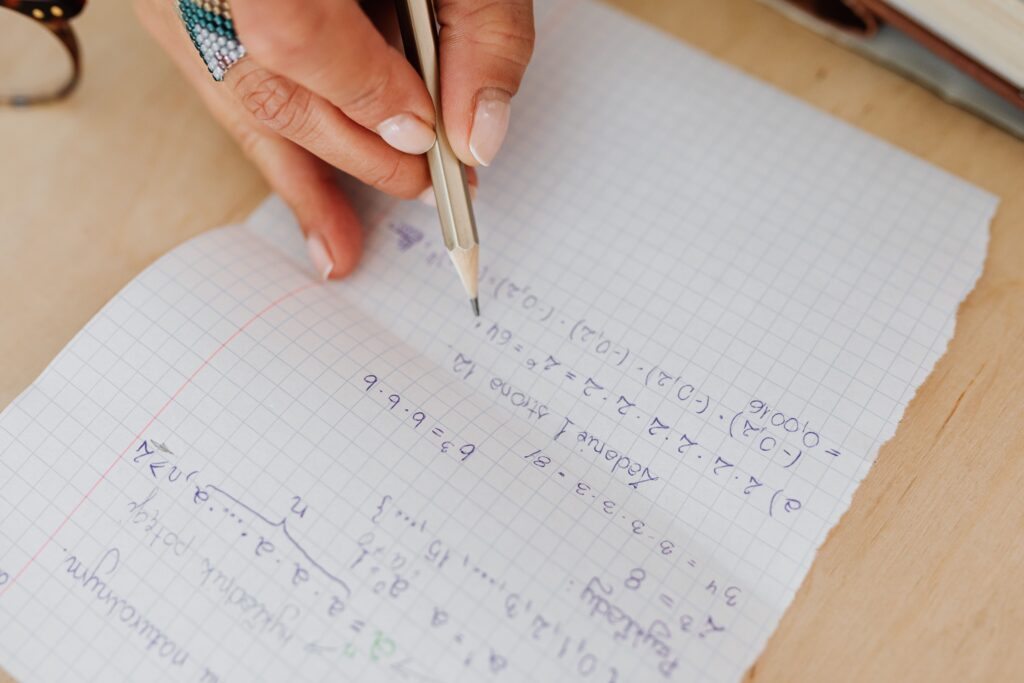
A student solving a complex math problem

Share This Post

Maths heuristics are general problem-solving strategies, such as drawing a model, guessing and checking, or working backwards. Pupils use them when a question does not point to one obvious method.

This guide explains the maths heuristics that Singapore primary pupils commonly encounter from Primary 3 to Primary 6, with a closer look at Primary 4. It is designed for parents who want to understand what their child is learning and why choosing the right method matters.

Heuristics are often one of the more difficult parts of primary maths for parents to support at home. The challenge is not always the arithmetic. More often, it is knowing which method fits the problem. At Stepping Stones Learning Centre, we focus on helping pupils recognise the clues in a question and choose an appropriate approach.

What Does the Singapore Maths Syllabus Say About Heuristics?

The Ministry of Education’s Mathematics Syllabus for Primary One to Six describes heuristics as general approaches to problem solving. Examples include drawing a diagram or tabulating information, making a guess through trial and error or supposition, acting out a process and working backwards (Ministry of Education, Mathematics Syllabus: Primary One to Six, implemented from 2021).

The syllabus also states that pupils should be exposed to heuristics and problem-solving approaches such as Polya’s model.

Polya’s model is a four-step problem-solving process: understand the problem, plan an approach, carry out the plan and check the answer. Heuristics are particularly relevant to the planning stage, which is why choosing an appropriate method is so important.

The syllabus does not provide a fixed year-by-year checklist for when each heuristic must be taught. Schools and tuition centres can therefore differ in the order they introduce these methods. The sequence below reflects common practice rather than a specific Ministry of Education requirement.

Why Does the Order of Maths Heuristics Matter?

Different heuristics build different problem-solving habits. Pupils typically encounter simpler representation strategies first before using more complex methods to tackle unfamiliar problems.

This section focuses on where heuristics fit into primary maths and why the sequence can be useful. For a separate guide to tackling problem sums, see our problem sums and step-by-step strategies for success.

The Institute of Policy Studies surveyed 1,500 parents of primary school children in 2026. It reported that median spending on private tuition reached $500 a month, compared with $242 in 2016 in today’s dollars (Institute of Policy Studies, IPS Working Papers No. 77, published 25 September 2026).

Nearly nine in ten parents, or 89.8 per cent, agreed that children in Singapore spend too much time on tuition and enrichment. Dr Mathew Mathews, the study’s principal investigator, said that for nearly 60 per cent of parents, tuition was not about their child needing additional help in school, as reported by The Straits Times in September 2026.

These figures describe the amount of time and money families are investing in tuition. They do not establish which teaching methods are most effective, and the study did not compare different teaching approaches.

For parents already investing time and money in additional learning, understanding how a child chooses a method can be more useful than simply completing more worksheets.

How Can Students Identify the Right Maths Heuristic?

Many problem sums contain clues that can help pupils decide which heuristic to consider. Learning to identify these clues is an important part of developing problem-solving skills.

Common examples include:

  • A final result is given, but the starting amount is unknown: consider working backwards.
  • Two types of items share a total and another fact, such as heads and legs: consider guess and check or supposition.
  • Two quantities change and are then compared or made equal: consider a before-and-after model.
  • Quantities are compared or divided into parts: consider drawing a model.
  • Every possible combination needs to be counted without repetition: consider making a systematic list.
  • The question is difficult to follow: restate the information in simpler words.

A clue does not guarantee that a particular heuristic is the correct method. Pupils still need to check whether the approach works with the information and numbers given.

This checking stage reflects the final step of Polya’s model and is an important habit in problem solving. Clue-spotting develops throughout primary school, and our Primary Mathematics tuition programme page explains how the different levels fit together.

Which Maths Heuristics Are Taught From Primary 3 to Primary 6?

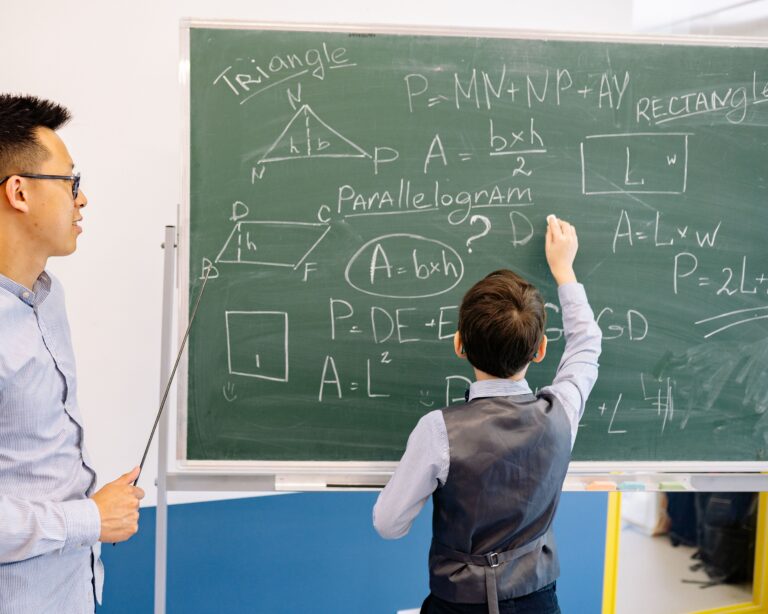
A teacher letting the student answer the math problem on the blackboard.

Pupils commonly encounter heuristics in a gradual sequence, with each year introducing new approaches while strengthening methods they have already learned. The exact order can vary between schools.

Primary 3: Learning to See the Problem

Primary 3 is commonly where model drawing becomes an important problem-solving tool. Part-whole and comparison models help pupils turn written information into a visual representation.

Pupils may also begin using simple systematic lists and identifying patterns. At this stage, the focus is on developing the habit of representing the problem before starting calculations.

Primary 4: Choosing the Right Method

Primary 4 is often where the range of heuristics expands and choosing an appropriate method becomes more important.

Alongside model drawing, pupils commonly encounter guess and check, working backwards and before-and-after comparisons. The challenge is not simply knowing how to use each method. Pupils also need to recognise which method best fits the question.

Parents can find more information about this level on our Primary 4 Maths tuition page.

Guess and Check

Suppose a farm has 10 animals consisting of chickens and rabbits, with 28 legs altogether.

A pupil might first guess that there are 5 chickens and 5 rabbits. This gives 30 legs, which is too many. The pupil can then adjust the guess to 6 chickens and 4 rabbits, which gives exactly 28 legs.

The checking process is an important part of the method. Each incorrect guess provides information about how the next attempt should be adjusted.

Working Backwards

Suppose Mei has some stickers, gives away 8, then doubles what remains and ends up with 24 stickers.

Working backwards means reversing the steps. First, divide 24 by 2 to get 12. Then add 8 to get the original amount of 20.

A forward check confirms the answer: 20 minus 8 is 12, and 12 doubled is 24.

Before and After

Suppose Ali has 30 stickers and Ben has 18. The question asks how many stickers Ali needs to give Ben so that they have the same number.

The difference is 12. Sharing that difference equally means moving half of it, so Ali gives Ben 6 stickers. Both pupils then have 24 stickers.

A before-and-after model can make this change easier to see and understand.

Primary 5: Refining Problem-Solving Methods

In Primary 5, pupils commonly encounter the supposition method as a more efficient development of guess and check.

For example, consider 30 animals with 84 legs. If a pupil assumes all the animals are chickens, there would be 60 legs. The difference is 24 legs, and each rabbit contributes 2 more legs than a chicken. Dividing 24 by 2 gives 12 rabbits, leaving 18 chickens.

Before-and-after problems can also become more complex, involving fractions or ratios rather than only whole numbers. Model drawing remains an important representation tool.

Primary 6: Choosing and Combining Heuristics

By Primary 6, a single problem may require pupils to use more than one heuristic.

For example, a pupil might use a model to represent a ratio problem and then work backwards to determine the starting amount. The skill being tested is not simply recalling one method. Pupils need to identify the information in the question, select a suitable approach and combine methods when necessary.

Pupils who have developed the habit of looking for clues in the question are better prepared to tackle unfamiliar problem sums.

What Is One Useful Question to Ask After Every Problem Sum?

After a pupil completes a problem sum, asking whether the final answer is correct is useful, but there is another question that can reveal more about their problem-solving ability:

Why did you choose that method?

A pupil who can explain, “The question gave me the end result, so I worked backwards,” is demonstrating an understanding of the heuristic.

If a pupil cannot explain why they chose a particular method, they may have reached the correct answer without fully understanding the approach. Asking about the method encourages pupils to think about their problem-solving process, not just the final answer.

If you would like to discuss how your child approaches problem sums, you can reach out through our contact page. We can discuss your child’s current level and what they may need to work on next.

FAQs

Heuristics are general problem-solving strategies that pupils use when a question does not have one obvious method. Examples include drawing a model, guessing and checking, making a systematic list and working backwards.

The Ministry of Education syllabus describes heuristics as general approaches to problem solving rather than fixed procedures.

Primary 4 pupils commonly encounter guess and check, working backwards and before-and-after comparisons alongside model drawing. The exact order can vary between schools.

The broader aim is to help pupils recognise the information in a problem and choose an appropriate method.

The supposition method is commonly introduced in Primary 5 after pupils are familiar with guess and check. It can provide a more efficient way to solve certain problems involving two types of items and a total.

The exact timing can vary between schools.

No. The syllabus does not provide a fixed level-by-level checklist for individual heuristics. Instead, it describes heuristics as general approaches to problem solving and expects pupils to be exposed to them.

Schools and tuition centres can therefore choose their own sequence, which means the order may differ.

Yes. Drawing a diagram or model is one of the representation approaches described in the syllabus. It is commonly introduced early and can continue to support pupils as they encounter more complex problem sums.

Many other problem-solving methods can also be supported by first representing the information visually.

The PSLE does not require pupils to name a particular heuristic, but problem-solving questions can require pupils to use suitable strategies.

Showing clear working is important because it allows the marker to see how the pupil approached the problem. Being able to choose an appropriate method can help pupils tackle unfamiliar questions more confidently.

Ask your child to explain why they chose a particular method, rather than asking only for the final answer.

Encourage them to check whether their answer makes sense in the context of the question. A short discussion after each problem can gradually build the habit of explaining and evaluating their problem-solving approach.

More To Explore

Enroll Now !!!

drop us a line and keep in touch

Tutors at Stepping Stones Learning Centre